 Imcy
ImcyDyslexia in Children: Signs, Consequences, and How to Overcome It
Dyslexia in Children: Signs, Consequences, and How to Overcome It
Updated: June 2026.
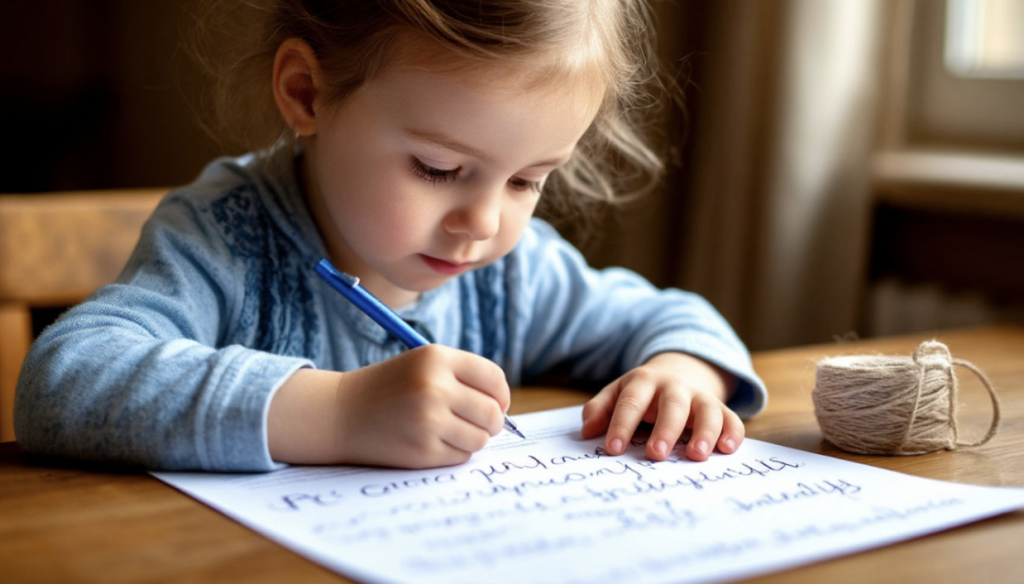
Dyslexia is a neurobiological disorder in which a person has difficulty recognizing letters, comprehending what they read, and relating letters to sounds, despite normal intelligence, vision, and hearing. This is not a disease or the result of laziness, but a feature of the brain that makes it difficult to process written information. According to research, dyslexia occurs in 5-10% of school-age children.
Signs of dyslexia
Signs may appear differently depending on the age of the child.
For preschoolers (3–6 years):
- delayed speech development compared to peers;
- errors when pronouncing long words;
- Difficulty expressing thoughts (inability to formulate sentences correctly or remember the right word);
- problems understanding rhymes;
- lack of interest in learning the alphabet;
- Difficulties with fine motor skills, sense of balance, and memorizing short poems and songs.
For younger schoolchildren (7–10 years old):
- slow reading with frequent errors (omission of letters, syllables or whole words, guessing reading – the child “thinks out” the word from the first letters);
- confusion of similar letters (“b”/“d”, “sh”/“sch”) and their rearrangement in words;
- difficulties remembering sequences of letters, numbers, days of the week, and the alphabet;
- inability to break words into parts to understand the meaning (for example, does not see “forty” and “legs” in the word “centipede”);
- errors in understanding words that sound similar (“spoon” – “leg”, “duck” – “jacket” – “joke”);
- difficulty retelling what you read; megapteka.ru +1
- problems with writing from dictation (ridiculous substitutions, missing letters, mirror spelling);
- avoidance of reading and writing due to psychological discomfort.
In teenagers and adults:
- avoiding reading aloud and working with large texts;
- Difficulty taking notes, completing documents, writing essays or letters;
- mistakes in simple words, despite knowing the rules;
- anxiety during reading tasks.
Associated symptoms may also be observed: problems with memory, concentration, orientation in space, confusion between “right” and “left”, “top” and “bottom”, clumsiness of movements, poor coordination.
What happens if you don’t work with dyslexia?
Without timely correction, dyslexia can lead to serious consequences:
- Lag in studies. Due to difficulties with reading and understanding texts, the child does not assimilate educational material, which affects grades and the general level of knowledge. The vocabulary is not replenished, basic knowledge is not formed.
- Low self-esteem and problems with socialization. A child may feel “not like everyone else,” which leads to uncertainty, fear of ridicule, and social isolation. Conflicts with classmates and teachers are possible.
- Psychological disorders. Chronic stress can lead to anxiety, depression, obsessive-compulsive disorder, or other mental disorders.
- Limitations in the future. In adulthood, dyslexia can make it difficult to choose a profession that requires working with texts and affect the quality of life.
Strengths of children with dyslexia
Despite their reading difficulties, children with dyslexia often have distinct strengths:
- developed imagination and imaginative thinking;
- a penchant for creative problem solving;
- the ability to see the whole picture, not details;
- good memory for images, visual and audio information;
- abilities in areas not related to reading: creativity, sports, chess, assembling construction sets, etc.
How to help a child with dyslexia
If you suspect dyslexia, you should contact a specialist: speech coach, neurocoach, defectologist. In some cases, consultation with a neurologist, coach or psychiatrist may be required.
Correction includes:
- Multisensory learning. The child uses several channels of perception: vision, hearing, touch, movement. For example, he sculpts letters from plasticine, traces them with his finger, and “draws” them in the air.
- Development of phonemic hearing – ability to distinguish speech sounds. Games with rhymes, word transformations, and selection of words for a given sound are used.
- Work on visual-spatial functions. Exercises for orientation in space, memorizing the sequence of objects.
- Neuropsychological correction. Development of cognitive functions: visual perception, working memory, attention switching.
- Psychological support. It is important to create a safe environment without criticism and comparisons with other children, to maintain motivation to study.
The school can ask for the following accommodations:
- increasing time to complete tasks;
- replacing written work with oral responses where possible;
- use of audio materials instead of texts;
- Providing cheat sheets and instructions in pictures for complex tasks.
Useful at home:
- read together, distributing the text into roles;
- use audiobooks;
- play verbal games (“Cities”, “I take with me in my suitcase…”), board games with words (“Scrabble”, “Scrabble”);
- form words from magnetic letters.
It is important to remember that dyslexia is not a death sentence. With timely correction and support, the child will be able to successfully study and realize his potential.
Why is it important to contact a specialist in time?
Do not delay visiting a specialist if you notice signs of dyslexia in your child. Early diagnosis and correction will help prevent consequences and make the child more confident and calm.
In “Animago” we apply a structured, evidence-based protocol for working with dyslexia.
What exactly do we do:
- We carry out a check-up. We look at the current state of the child.
- We develop an individual program based on diagnostic results, taking into account the characteristics and strengths of the child.
- We use evidence-based methods:
- technology to reduce anxiety and develop a positive attitude towards learning;
- exercises to develop phonemic awareness;
- training of visual-spatial functions.
We organize classes in a playful way with multi-heroes – this way the child is less anxious and more actively involved in the process.
Sign up for checkup This is 30 minutes of work with a coach and 30 minutes of consultation for a parent. As a result, you will receive recommendations on how to help your child if necessary.
Read also:
“7 Pixar films that will help you talk to your child about important things”
“How to prepare a child for the first meeting with an Animago coach”
“Increased anxiety in children: causes, symptoms and methods of help”
Try Animago
Animago is an online team of highly qualified child coaches who lead sessions with children and support parents using evidence-based methods. For children ages 3–7, Animago coaches meet as animated characters over live video.
We help with common childhood challenges—fears, anxiety, low confidence, shyness, and more—and support healthier parent-child relationships. The Animago team has already helped more than 2,500 children build resilience!
Want to try it?

See also
Не удалось встроить форму оплаты. Откройте оплату в новом окне:
Перейти к оплатеМы используем файлы cookies для улучшения работы сайта и анализа трафика. Продолжая использовать сайт, вы соглашаетесь с нашей политикой конфиденциальности.